Table of Contents
Introduction: The Hidden Cost of Outdated Parts Cleaning in Automotive Manufacturing
In the high-stakes world of automotive component manufacturing, precision is non-negotiable. Whether producing suspension systems for two-wheelers weaving through urban traffic, passenger vehicles cruising highways, or heavy commercial trucks hauling freight, every single component must perform under extreme mechanical stress.
Yet, inside many of India’s top manufacturing hubs—including the automotive corridor of Chennai—a silent operational bottleneck threatens margins, cycle times, and quality metrics: outdated industrial parts washing processes.
For decades, metal fabricators and Tier-1 automotive suppliers have relied on legacy cleaning methods: large soak tanks filled with aggressive caustic chemical cleaners, hot alkaline baths, and labor-intensive physical wiping by hand. While caustic chemicals remove machining oils and greases, they create a major unintended problem: instant flash rust.
To counteract flash rust, manufacturers build complex, multi-stage workarounds:
- De-oiling to strip residual machining fluids.
- Phosphating or conversion coating to temporarily seal metal surfaces.
- Heavy oiling or applying protective rust inhibitors before final assembly or painting.
This traditional routine inflates production costs, consumes valuable floor space, increases lead times, and poses continuous Environmental Health and Safety (EHS) risks for workers.
This detailed article explores how a prominent ₹200 Cr auto shock absorber manufacturer based in Chennai eliminated this multi-step headache by transitioning to Triple 7 Mega Clean—a high-performance, organic bio-based cleaner supplied by Evergreen Solutions.
Anatomy of a Manufacturing Challenge: The ₹200 Cr Chennai Auto Component Plant
To understand the magnitude of this operational transformation, consider the operational profile of the client.
Operating out of Chennai, Tamil Nadu—often dubbed the “Detroit of South Asia”—this ₹200 Cr manufacturing enterprise is a leading supplier of cost-effective, high-reliability shock absorbers and dampers. Their market reach spans four distinct automotive verticals:
- 2-Wheeler and 3-Wheeler Segment: High-volume shock absorbers for scooters, motorcycles, and commercial auto-rickshaws.
- Passenger Vehicle Segment: Precision struts and hydraulic dampers engineered to meet strict Original Equipment Manufacturer (OEM) specifications.
- Commercial Truck Segment: Heavy-duty, reinforced suspension units designed for rugged payload demands.
- Aftersales Market: Replacement shock absorbers distributed across India for commercial fleet maintenance.
To maintain market leadership across these diverse sectors, the plant operates under strict cost targets while continually striving to improve product durability.
The Problem: Caustic Soak Tanks, Manual Wiping, and Flash Rust
During the manufacturing of shock absorbers, components like piston rods, hydraulic damper cylinders, seal retainers, and valve plates undergo extensive machining, stamping, and grinding. These operations leave behind high concentrations of heavy neat oils, synthetic coolants, fine iron particulates, and shop dust.
Before components can move to assembly, leak testing, or painting, they must be thoroughly cleaned.
This multi-step sequence created four major bottlenecks for the Chennai facility:
1. Excessive Labor and Safety Hazards
Manual wiping of sharp, oil-slicked metal components in open caustic tanks presented continuous health hazards. Operators suffered skin irritation, fume exposure, and repetitive motion strain, while dedicated cleaning personnel added significant labor costs.
2. Off-Site Logistics and High Vendor Expenses
Because the plant did not possess full in-house conversion coating setups for all part geometries, select components had to be loaded into trucks and sent to specialized vendor workshops across Chennai for phosphating and rust inhibition. This introduced freight expenses, risk of handling damage, and unpredictable vendor turnaround times.
3. Millipore Test Failures
Modern automotive OEMs impose strict Millipore gravimetric cleanliness standards (measuring the mass and size distribution of residual solid particulates on washed parts). Physical wiping with shop rags smears contaminants into microscopic surface pores rather than removing them, leading to unpredictable Millipore test results and frequent lot rejections.
4. High Waste Stream Loads
Caustic cleaning baths deplete quickly and require frequent chemical dumps into the plant’s Effluent Treatment Plant (ETP), increasing water treatment costs and chemical waste disposal charges.
The Turning Point: Transitioning to Lean Manufacturing with Green Chemistry
As part of an aggressive strategic roadmap to expand market share, plant management initiated a total operational audit aimed at implementing Lean Manufacturing principles.
Achieving these goals required re-evaluating the plant’s surface chemistry. Replacing caustic chemicals with an eco-friendly bio-based degreaser allowed the company to streamline the entire wash process without investing millions in secondary treatment equipment.
The Catalyst: Triple 7 Mega Clean by Evergreen Solutions
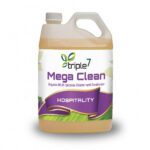
Evergreen Solutions—a Chennai-based pioneer in eco-friendly, bio-based industrial chemicals—introduced the plant’s engineering team to Triple 7 Mega Clean.
What Makes Triple 7 Mega Clean Different?
Unlike traditional caustic degreasers that strip soils through aggressive, highly alkaline chemical reactions, Triple 7 Mega Clean utilizes advanced bio-based colloidal surfactant technology:
- Micellar Encapsulation: Tiny bio-surfactant molecules (micelles) penetrate oil layers, break the surface tension, and lift greases and fine particles away from the metal substrate.
- Soil Suspension: Once detached, soils remain suspended in the water phase without redepositing onto the clean component.
- Inherent Corrosion Barrier: Rather than altering the metal chemistry and triggering flash rust, Triple 7 Mega Clean leaves a micro-thin protective barrier on ferrous surfaces, preventing oxidation during indoor storage.
- Substrate & Operator Safety: The formulation is non-corrosive, non-toxic, readily biodegradable, and completely safe for operators, elastomeric seals, rubber bushings, and multi-metal assemblies.
Discover the full range of bio-based degreasers and specialty industrial cleaners at the Evergreen Solutions Product Catalog.
Deep-Dive Results: How Triple 7 Mega Clean Reshaped Plant Operations
After running pilot trials on shock absorber piston rods and damper tubes, the client completely overhauled their parts washing line. The results were immediate and measurable across five operational domains:
1. Complete Elimination of 3 Post-Treatment Operations
Because Triple 7 Mega Clean prevents flash rust during the wash process itself, the client completely dismantled their legacy post-wash loop.
- De-oiling eliminated: Parts no longer enter assembly coated in heavy machining fluids.
- Phosphating bypassed: Secondary conversion coating for temporary storage is no longer required.
- Re-oiling stopped: Components no longer require oil coating before internal transfer.
2. Elimination of Off-Site Vendor Transport
With flash rust eliminated, parts no longer need to be loaded onto trucks and dispatched across Chennai for third-party phosphating. All washing and surface preparation now happen in-house within the main assembly hall.
3. Mastery over Millipore Cleanliness Testing
Because micellar surfactant action lifts fine wear particles from metal pores (rather than smearing them with shop rags), parts washed in Triple 7 Mega Clean achieve high technical cleanliness scores. Gravimetric particulate residue dropped significantly, ensuring consistent compliance with strict OEM Millipore benchmarks.
4. Manpower and Safety Optimization
Operators previously assigned to hand-wiping components in chemical soak tanks were reassigned to core assembly and quality inspection roles. Workstation air quality improved, chemical skin burns were eliminated, and hazardous ETP discharge volume decreased substantially.
Financial & Operational Impact Analysis
Below is an operational comparison between the legacy caustic process and the modernized Triple 7 Mega Clean process:
| Operational Variable | Legacy Caustic & Manual Cleaning | Triple 7 Mega Clean Process | Plant-Wide Advantage |
|---|---|---|---|
| Cleaning Mechanism | High-pH Caustic Chemical Attack + Hand Wiping | Colloidal Micellar Encapsulation | Gentle on substrate; safer for operators |
| Process Steps Required | 5 Steps (Soak, Wipe, De-oil, Phosphate, Oil) | 1 Single Wash Step | 80% Reduction in process steps |
| Flash Rust Susceptibility | High (Requires immediate oiling/phosphating) | Zero (Inherent rust protection) | Prevents scrap and re-work |
| Logistics Expenses | High (City-wide third-party processing runs) | Zero (100% In-House) | Eliminates vendor and freight costs |
| Millipore Compliance | Inconsistent / High Rejection Risk | Consistently Compliant | Meets stringent OEM standards |
| Operator Safety Profile | Corrosive fumes, chemical burn risk | Non-corrosive, non-toxic, low VOC | Higher safety standards |
| ETP Environmental Load | Heavy sludge, frequent bath dumps | Readily Biodegradable formulation | Lower wastewater treatment fees |
Future Horizon: Expanding Plant-Wide Integration
Encouraged by the initial performance in parts washing, the client’s process engineering team is expanding the use of Triple 7 Mega Clean across other key stages of production, including active component parts washing, leak testing fluid integration, and automated pre-paint surface preparation.
Key Takeaways for Automotive Component Manufacturers
For plant managers, process engineers, and operations directors looking to optimize parts washing, this Chennai case study offers three key insights:
- Caustic Cleaners Carry Hidden Costs: The initial purchase price of cheap caustic chemicals is often offset by hidden costs—flash rust, multi-step post-treatments, vendor freight fees, and poor EHS ratings.
- Technical Cleanliness Requires Modern Chemistry: Passing Millipore tests requires lifting particulates out of substrate pores via micellar encapsulation, rather than smearing them through manual wiping.
- Green Chemistry Supports Lean Manufacturing: Transitioning to safe, bio-based solutions like Triple 7 Mega Clean removes production bottlenecks, streamlines manpower, and lowers cost per unit.
Explore Related Industrial Solutions
Discover how bio-based chemical solutions can improve safety, quality, and efficiency across your facility:
- Eco-Friendly Industrial Degreasers — Non-corrosive, bio-based solvent alternatives for heavy degreasing.
- Rust Cleaners & Inhibitors — Safe surface preparation and long-term corrosion prevention solutions.
- Automotive Parts Washers — High-performance formulations for precision engineering applications.
Ready to Streamline Your Parts Washing Line?
Ditch toxic caustic baths, stop paying third-party transport fees, and eliminate flash rust on your manufacturing line.
Partner with Evergreen Solutions to upgrade your plant to Triple 7 Mega Clean. Contact our technical engineering team today to schedule an on-site audit or request a sample kit:
- Official Website: www.evergreensolution.co
- Sales & Support Email: info@evergreensolution.co
- Chennai Office Phone: +91-9884032102